 When I first heard John Piper speak, my life changed immediately. I was sitting on the old, probably environmentally dangerous, little couch that Eric and I took off the hands of North Greenville’s admissions director, as I was encountered with a level of preaching that turned my world upside down. My first exposure was on the Passion One-Day dvd where Piper preached his famous message, “Boast Only in the Cross“. I was overwhelmed by his intensity, as many are. But even more so, I was severely challenged by the incredible intersection of theology and pastoral care which Piper exhibited before thousands of young people. Just a 50 something yr. old man, standing virtually still behind a skinny, little music stand, declaring the Word of God in the power of the Holy Spirit over a mass of youth. He wasn’t up there jumping around, telling cute stories, or using some kind of clever prop or movie clip. He was mining out precious gems and treasure from the storehouse of Scripture, explaining in detail how to understand Galatians 6:14 and make it come to bear on your life. The theological depth of his exposition and application awakened my heart to the realization I had not been doing the same thing. Using Piper as a mirror of sorts, I realized how much entertaining I had done as a preacher of God’s Word, and in the middle of Bible College, I came face-to-face with how little regard I had for theology. It wasn’t that I didn’t think theology was useful. I just didn’t know how it was useful. I knew that as a Christian you had to believe or affirm certain doctrinal truths, but beyond that, I was ignorant of how theology was applicable to the particulars of my daily life. Part of this dilemma had to do with what I believed “theologically” about many other areas such as spirituality, Scripture, salvation, and the doctrine of God. All of this to say, my encounter with Piper through the TV screen was the event that God used dramatically in my life to set my feet upon a path towards fostering a conviction and desire in my heart to shape my studies and education in the direction of recovering the pastor-theologian role. From there on out, as people asked me, “Why do you need an MDiv or a Ph. d. to be a pastor?” “Isn’t that overkill?” I would respond, “I want to be certain kind of pastor. A pastor-theologian.”
Once you’re acquainted with Church history, you quickly recognize that the pastor-theologian role was standard in the Church. It wasn’t until the Enlightenment that theology became more a scientific endeavor and was progressively housed in the universities. On the flip side, most of your well known figures in Church history, those who are regarded as the great theologians of the past, were pastors. Just to name a few: Athanasius, Augustine, Luther, and Calvin. The same goes for most of the Puritans, and even Jonathan Edwards. Lest we also forget “the prince of preachers”, Charles H. Spurgeon. When you go back and read sermons from this long list of Christian stalwarts, you immediately see a difference between their conception of a sermon in comparison to contemporary models. I’m not going to get into a critique of modern preaching or current notions of the “sermon”, however, I commend you to these men and to read their sermons, and see how they pastored and then do some serious reflection on what we consider the norms for today in the pastorate.
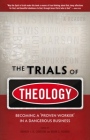
I’m excited to see that these messages which were delivered back in 2009 during The Gospel Coalition conference have made their way into book form. You can listen to the audio for Piper’s and Carson’s at the links I’ve provided below. They are both dense with great insight, biblical wisdom, and worthy charges in steps forward towards rejoining theology and pastoral care whether in the pulpit or in the classroom. Even if you’re not considering being a pastor or a professional scholar, these messages will be of benefit as you weigh your own thoughts on the relationship between theology and daily living as well as you own expectations for your pastor and the work of your Church. And hopefully, it will even help you understand academic work and academic reading in a better, more appealing light. The book is set to be released in May, 2011. It will be, in my opinion, a “must-have” resource and constant reminder for all pastors and theologians.
- Click here to check the book out at the WTS bookstore.
- Click here to listen to John Piper’s, “The Pastor as Scholar”. His talk is mainly autobiographical.
- Click here to listen to D. A. Carson’s, “The Scholar as Pastor”. His message is partially autobiographical, but more pointedly instructive. He gives a list of things to consider for all scholar-pastors/pastor-scholars.
- Click here to listen to the time of Q & A with both of them.
- See also another related post I wrote called “Theological Education: The Academy, the Bible, and the Church“.
 Wow, I can’t believe I’m actually submitting a new post. I haven’t even looked to see when was the last time I published one. I’m just sitting here by my computer doing some research, and decided that I wanted to share this quote from Luther on my blog as I did in the olden days.




 Joy in the Journey

Recent Comments